The facility will be the first of its kind in a number of software and information technology development centers in Asia, Europe North America and Latin America THIRUVANANTHAPURAM, India – The first Nissan Global Digital Hub at Technopark in Trivandrum was inaugurated on Monday in India. The state of the art facility – located in… Continue reading First Nissan Global Digital Hub inaugurated in India
Tag: Mobility
Does Moia have the mobility concept for the future?
‘,e.appendChild(e.resizeSensor),e.resizeSensor.offsetParent!==e&&(e.style.position=”relative”);var r,s,d,a,l=e.resizeSensor.childNodes[0],c=l.childNodes[0],u=e.resizeSensor.childNodes[1],h=e.offsetWidth,f=e.offsetHeight,m=function(){c.style.width=”100000px”,c.style.height=”100000px”,l.scrollLeft=1e5,l.scrollTop=1e5,u.scrollLeft=1e5,u.scrollTop=1e5};m();var p=function(){s=0,r&&(h=d,f=a,e.resizedAttached&&e.resizedAttached.call())},v=function(){d=e.offsetWidth,a=e.offsetHeight,(r=d!=h||a!=f)&&!s&&(s=t(p)),m()},y=function(e,t,n){e.attachEvent?e.attachEvent(“on”+t,n):e.addEventListener(t,n)};y(l,”scroll”,v),y(u,”scroll”,v)}}(e,o)}),this.detach=function(e){n.detach(i,e)}};return n.detach=function(t,n){e(t,function(e){e&&(e.resizedAttached&&”function”==typeof n&&(e.resizedAttached.remove(n),e.resizedAttached.length())||e.resizeSensor&&(e.contains(e.resizeSensor)&&e.removeChild(e.resizeSensor),delete e.resizeSensor,delete e.resizedAttached))})},n}),function(e,t){“function”==typeof define&&define.amd?define([“./ResizeSensor.js”],t):”object”==typeof exports?module.exports=t(require(“./ResizeSensor.js”)):(e.ElementQueries=t(e.ResizeSensor),e.ElementQueries.listen())}(“undefined”!=typeof window?window:this,function(e){var t=function(){function n(e){e||(e=document.documentElement);var t=window.getComputedStyle(e,null).fontSize;return parseFloat(t)||16}function i(e,t){var i=t.split(/d/),o=i[i.length-1];switch(t=parseFloat(t),o){case”px”:return t;case”em”:return t*n(e);case”rem”:return t*n();case”vw”:return t*document.documentElement.clientWidth/100;case”vh”:return t*document.documentElement.clientHeight/100;case”vmin”:case”vmax”:var r=document.documentElement.clientWidth/100,s=document.documentElement.clientHeight/100;return t*(0,Math[“vmin”===o?”min”:”max”])(r,s);default:return t}}function o(t,n){t.elementQueriesSetupInformation?t.elementQueriesSetupInformation.addOption(n):(t.elementQueriesSetupInformation=new function(e){this.element=e,this.options={};var t,n,o,r,s,d,a,l=0,c=0;this.addOption=function(e){var t=[e.mode,e.property,e.value].join(“,”);this.options[t]=e};var u=[“min-width”,”min-height”,”max-width”,”max-height”];this.call=function(){for(t in l=this.element.offsetWidth,c=this.element.offsetHeight,s={},this.options)this.options.hasOwnProperty(t)&&(n=this.options[t],o=i(this.element,n.value),r=”width”==n.property?l:c,a=n.mode+”-“+n.property,d=””,”min”!=n.mode||o>r||(d+=n.value),”max”!=n.mode||r>o||(d+=n.value),s[a]||(s[a]=””),d&&-1===(” “+s[a]+” “).indexOf(” “+d+” “)&&(s[a]+=” “+d));for(var e in u)u.hasOwnProperty(e)&&(s[u[e]]?this.element.setAttribute(u[e],s[u[e]].substr(1)):this.element.removeAttribute(u[e]))}}(t),t.elementQueriesSetupInformation.addOption(n),t.elementQueriesSensor=new e(t,function(){t.elementQueriesSetupInformation.call()})),t.elementQueriesSetupInformation.call(),l&&c.indexOf(t)o[e].minWidth&&(n=e);if(n||(n=s),d!=n)if(a[n])i[d].style.display=”none”,i[n].style.display=”block”,d=n;else{var l=new Image;l.onload=function(){i[n].src=r[n],i[d].style.display=”none”,i[n].style.display=”block”,a[n]=!0,d=n},l.src=r[n]}else i[n].src=r[n]}var i=[],o=[],r=[],s=0,d=-1,a=[];for(var u in t.children)if(t.children.hasOwnProperty(u)&&t.children[u].tagName&&”img”===t.children[u].tagName.toLowerCase()){i.push(t.children[u]);var h=t.children[u].getAttribute(“min-width”)||t.children[u].getAttribute(“data-min-width”),f=t.children[u].getAttribute(“data-src”)||t.children[u].getAttribute(“url”);r.push(f);var m={minWidth:h};o.push(m),h?t.children[u].style.display=”none”:(s=i.length-1,t.children[u].style.display=”block”)}d=s,t.resizeSensor=new e(t,n),n(),l&&c.push(t)}function d(e){var t,n,i,o,r,s;for(e=e.replace(/’/g,’”‘);null!==(t=h.exec(e));)for(n=t[1]+t[3],attrs=t[2];null!==(attrMatch=f.exec(attrs));)i=n,o=attrMatch[1],r=attrMatch[2],s=attrMatch[3],void 0===u[o]&&(u[o]={}),void 0===u[o][r]&&(u[o][r]={}),void 0===u[o][r][s]?u[o][r][s]=i:u[o][r][s]+=”,”+i}function… Continue reading Does Moia have the mobility concept for the future?
UGT believes that Spain is not prepared to lead the change to sustainable mobility
Statements by UGT Secretary General, Pepe Álvarez, collected from the Public Mirror Program by Europa Press, refuted the union’s position on the initiative to transition to sustainable mobility by pointing out that Spain is not the right country to lead the change, “a country which exports 80% of the cars it produces “. The secretary… Continue reading UGT believes that Spain is not prepared to lead the change to sustainable mobility
The price of the second-hand vehicle rises by 4.4% in November and stands at 15,235 euros
Posted 11/12/2018 11: 34: 03CET MADRID, 11 Dec. (EUROPA PRESS) – The average price of used vehicles in Spain rose by 4.4% in November compared to the same month of the previous year, standing at 15,235 euros, according to data from Coches.net. In the eleventh month of the year a total of 243,009 second-hand cars… Continue reading The price of the second-hand vehicle rises by 4.4% in November and stands at 15,235 euros
JAC Volkswagen holds groundbreaking ceremony of the new R&D centre in China to boost the electric vehicle
JAC Volkswagen Automotive Co., Ltd. held a groundbreaking ceremony for the New Energy Passenger Vehicle Project R&D Centre located in Hefei, Anhui Province. The ceremony came two weeks after a strategic agreement was signed by Volkswagen Group China, JAC and SEAT in the presence of Chinese President Xi Jinping and Spanish Prime Minister Pedro Sánchez.… Continue reading JAC Volkswagen holds groundbreaking ceremony of the new R&D centre in China to boost the electric vehicle
Mon 10 Dec 2018
Shell showcases the Global Vehicle Trust ‘OX’ at its marquee event Make the Future in Chennai
Shell India launches the “OX to India” mission- a potential mobility solution for accessible, efficient, low-cost all-terrain transportation in developing regions
OX to India, a mission to showcase capability of vehicles by bringing low-cost, all-terrain mobility to rural communities in developing countries
Ox is lightweight and rugged; low cost with simple maintenance; designed for self-assembly, supplied fully assembled or flat-packed for easy shipping
Can carry a payload of 1,900kg including everyday necessities, medical supplies, building and agriculture materials. It can seat up to 13 people
Focusing on bridging the mobility divide in India, Shell today unveiled the world's first 'flat-pack' truck –The OX – an all-terrain vehicle for reaching remote areas. The OX is a low-cost and simple to maintain truck suitable for the diverse and rugged Indian terrain of deep sands, steep hills, marshy lands, and steep river banks in hard-to-reach communities in developing regions. It is also the world’s first flat-pack truck – it can be assembled from a flat-pack kit in less than 12 hours and transported in greater numbers to where it is needed more quickly.
Unveiled at the first edition of Shell’s Make the Future festival in India, the OX truck is a global partnership between Shell and Gordon Murray Design (GMD) and the Global Vehicle Trust (GVT). It is an effort by Shell to empower communities living in the interiors of the country, by providing an effective transportation solution.
Nitin Prasad, Chairman, Shell Companies in India, said “Limited mobility restricts access to basic amenities in remote areas. Shell is eager to contribute to developing and promoting effective mobility solutions thereby improving the quality of life of people in these areas. The OX is a very promising technology having immense potential to broaden access to transport possibilities. We are pleased to partner with GMD and GVT and hope this versatile vehicle will be instrumental in transforming lives and overcoming daily accessibility challenges.”
The flat-pack design makes OX the first-of-its-kind vehicle that is simple to maintain, having accessible components and fewer parts. It is ecologically sound, easy to manufacture, build and transport.
The lightweight OX originated from the vision of one man – Sir Torquil Norman, the founder of GVT, and is based on GMD’s flexible iStream technology. It is specifically designed to carry a payload of 1900 kg (twice the capacity of most current pickups), with a seating capacity of up to 13 people or eight 44-gallon drums.
The design for the OX is nothing short of revolutionary, and the flat-pack format fundamentally changes the way a vehicle can be bought and transported, providing specific advantages to lead times and overall unit cost.
The second day of the Make the Future, featuring Shell Eco-marathon, also saw student teams competing on the track after passing a detailed technical inspection. The winning teams under different categories will be announced on December 9th and rewarded with cash prize of INR 20 Lac.
Notes to Editor
About Make the Future India 2018
Held for the first time in India, Make the Future featuring Shell Eco-marathon, is a festival of ideas and innovation. It is a unique global platform for conversations, collaboration and innovations focused on world’s energy challenges. In India, the event focuses on “Powering progress in mobility, together”. The four-day event will feature bright energy ideas and solutions that address the global energy challenge: how to meet the energy demands of the future, while producing less CO2. Taking place at Madras Motor Race Track, Chennai from December 6-9, 2018, the event will host thousands of visitors, inviting them to experience the ideas, contribute their own and join the journey to an energy-efficient, low-carbon future.
About Shell Eco-marathon India
Shell Eco-marathon is a competition for students who are passionate about developing innovative mobility solutions. It challenges engineering, design, science and technology students to design, build and drive the world’s most energy efficient vehicle. Shell Eco-marathon is a visible demonstration of Shell’s commitment to help the world meet its growing energy needs in a responsible way by working together with students, partners and other stakeholders. Teams from colleges/universities across India will compete in an exciting head-to-toe race to see who has the most energy-efficient vehicle.
DOWNLOADSDownload Release
DeepMap Signs Deal to Provide HD Mapping Technology to Ridecell & Einride – FutureCar
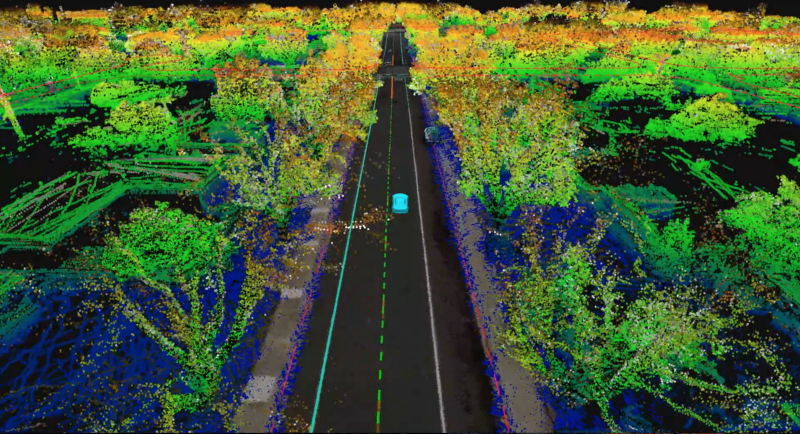
author: FutureCar Staff Silicon Valley startup DeepMap, a provider of high-definition (HD) mapping and localization technology for autonomous vehicles, has announced licensing deals with San Francisco-based mobility platform provider Ridecell and Sweden-based Einride. As part of the deal, Ridecell and Einride will integrate DeepMap’s HD mapping software in their autonomous fleets. DeepMap was founded… Continue reading DeepMap Signs Deal to Provide HD Mapping Technology to Ridecell & Einride – FutureCar
SoftBank invests in parking startup ParkJockey pushing valuation to $1 billion
SoftBank continues to invest in the future of transportation — this time in ParkJockey, a startup that has built a technology platform aimed at monetizing parking lots. And ParkJockey, which was founded in 2013, is already using that capital to scale up. Along with the SoftBank investment news, ParkJockey also announced that it was acquiring two… Continue reading SoftBank invests in parking startup ParkJockey pushing valuation to $1 billion
INRIX and HERE partner to deliver advanced mobility solutions
INRIX and HERE partner to deliver advanced mobility solutions
Jaguar Land Rover’s venture capital fund made seed investment in WeTrip
Jaguar Land Rover’s venture capital fund made seed investment in WeTrip
InMotion Ventures, Jaguar Land Rover’s venture capital fund, today announces seed investment in WeTrip, the digital platform making group holiday planning and booking simpler.
Jaguar Land Rover’s venture capital fund invests in group travel experience platform WeTrip
InMotion Ventures backs WeTrip to accelerate product development and support ambitious global growth plans
COVENTRY, 29-Nov-2018 — /EuropaWire/ — InMotion Ventures, Jaguar Land Rover’s venture capital fund, today announces seed investment in WeTrip, the digital platform making group holiday planning and booking simpler.
InMotion’s seed stage funding will support WeTrip in its global ambition to become the go-to digital platform for booking personalised group experience holidays. In August 2017, the company raised $1m funding to launch WeSki, a platform that allows groups to share responsibility for booking complete, tailor-made ski holidays.
As well as investing in the future of mobility, our fund seeks to back companies that are enabling adventure through powerful digital lifestyle brands. WeTrip is rapidly building a community of adventurous travellers, using their powerful tool for group bookings, and we believe there is a genuine unmet need for a product of this kind. SEBASTIAN PECK, MANAGING DIRECTOR
Our unique platform offers travellers greater flexibility, better value and a simpler way to book group holidays, centred around a shared adventure, to bring the fun back to the booking experience. We are thrilled to have the backing of InMotion to accelerate our product development and support our ambitious global growth plans. YOTAM IDAN, CHIEF EXECUTIVE
FURTHER INFORMATION
About InMotion
At InMotion, we are investing in the future of transport, mobility and travel. Powered by Jaguar Land Rover, we are supporting entrepreneurs and innovators who change the way we move.
InMotion Ventures is Jaguar Land Rover’s venture capital fund. We invest in early-stage technology companies that change the face of urban mobility, support an active outdoor lifestyle and deliver unique travel experiences. We are based in London and invest globally.
InMotion’s mobility services arm Studio 107 works closely with our parent company Jaguar Land Rover to build new services in the urban mobility sector. The name Studio 107 is a nod to the 107% rule in motorsport. In qualifying, drivers who fail to set a lap within 107% of the fastest qualifying time are not allowed to start. Our goal is to select the ideas that play to our strengths and develop them into winning businesses.
To find out more about InMotion, please see: https://www.inmotionventures.com
NOTES TO EDITORS
About WeTrip
WeTrip is a fully dynamic booking website designed specifically for millennial group travelers who seek unforgettable, great value experiences. WeTrip partners with multiple travel operators to offer greater choice, more flexibility and a simpler booking experience.
The ability of the organiser to share the group package with friends – who can then tweak and pay independently for their own requirements online – is one of the key features that makes this company unique.
WeSki, the 1st product, is a trailblazer in the category that is putting the fun back into booking ski holidays.
For further information, contact:
Sally Clift
Corporate Communications
Mobile: +44 (0)7384 430009
Email: sclift2@jaguarlandrover.com
SOURCE: InMotion Ventures
Tweet
Share
0
+1
0